Explore Lake Natoma with confidence. This beginner's guide to paddling covers safety tips, basic techniques, and common mistakes to avoid on your first adventure.
Why Lake Natoma Is Ideal for Beginner Paddlers
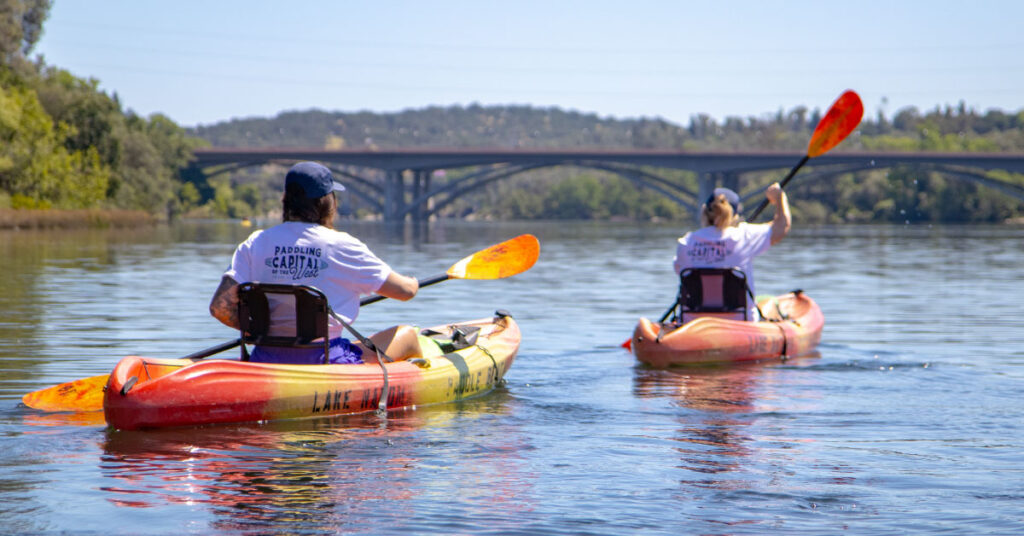
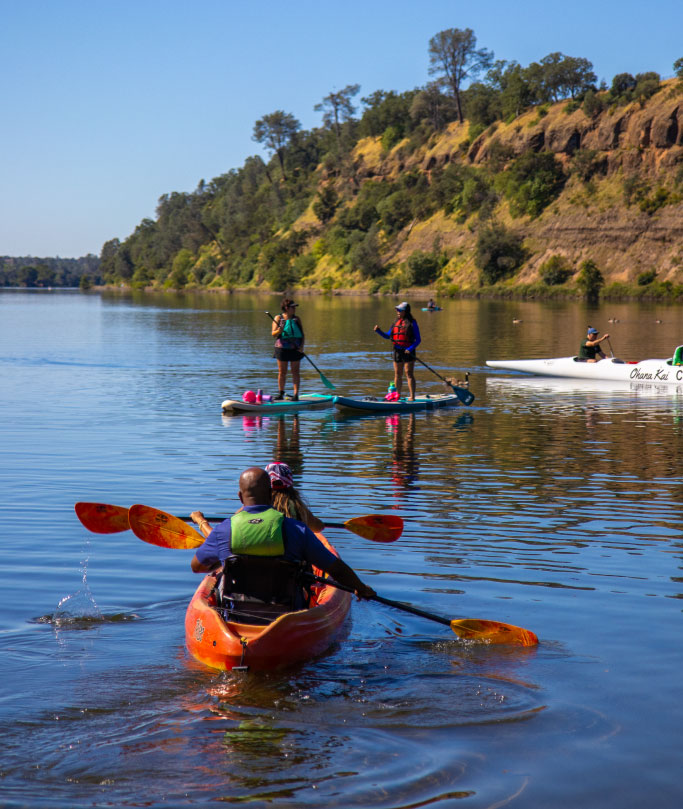
Whether you’re trying paddleboarding for the first time or planning your first kayaking adventure, Folsom is one of California’s premier paddling destinations. Known as the Paddling Capital of the West, Folsom offers easy access to Lake Natoma, where calm waters, scenic surroundings, and beginner-friendly launch locations make it an ideal place to learn paddling, kayaking, and stand-up paddleboarding.
Common Beginner Paddling Mistakes and How to Avoid Them
Every paddler starts somewhere, and most beginner mistakes are easy to avoid with a little preparation. Before you launch, keep these common mistakes in mind to help make your experience safer, more comfortable, and more enjoyable.
1. Starting with the Wrong Equipment
One of the most common beginner paddleboarding mistakes happens before you even get on the water. Choosing the right equipment can make learning significantly easier.
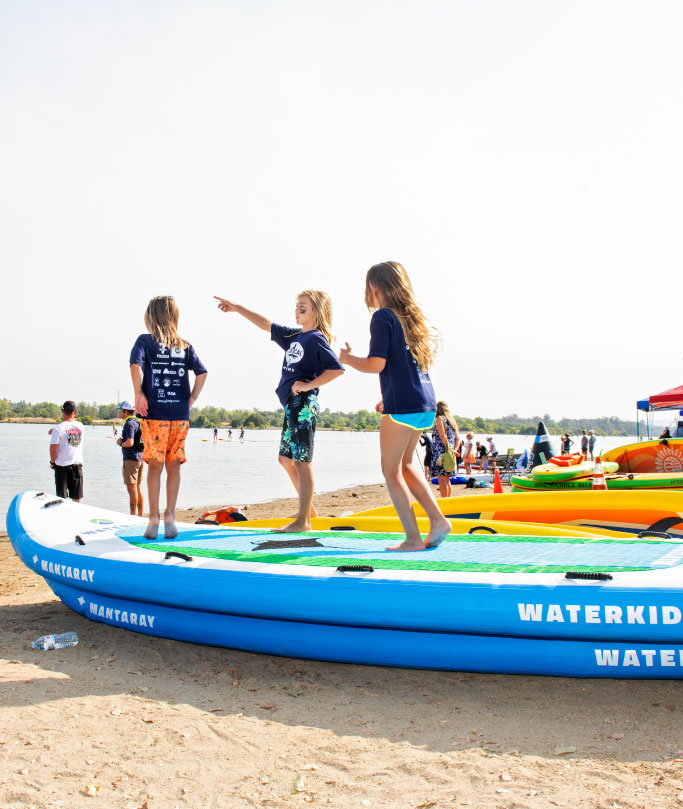
If you’re paddleboarding, look for a board designed for stability rather than speed. Wider boards offer more balance and confidence for first-time paddlers. If you’re renting equipment, ask staff for recommendations based on your experience level and the conditions you’ll be paddling in.
Inflatable paddleboards should also be inflated to the manufacturer’s recommended PSI. An underinflated board can feel unstable, sluggish, and harder to control.
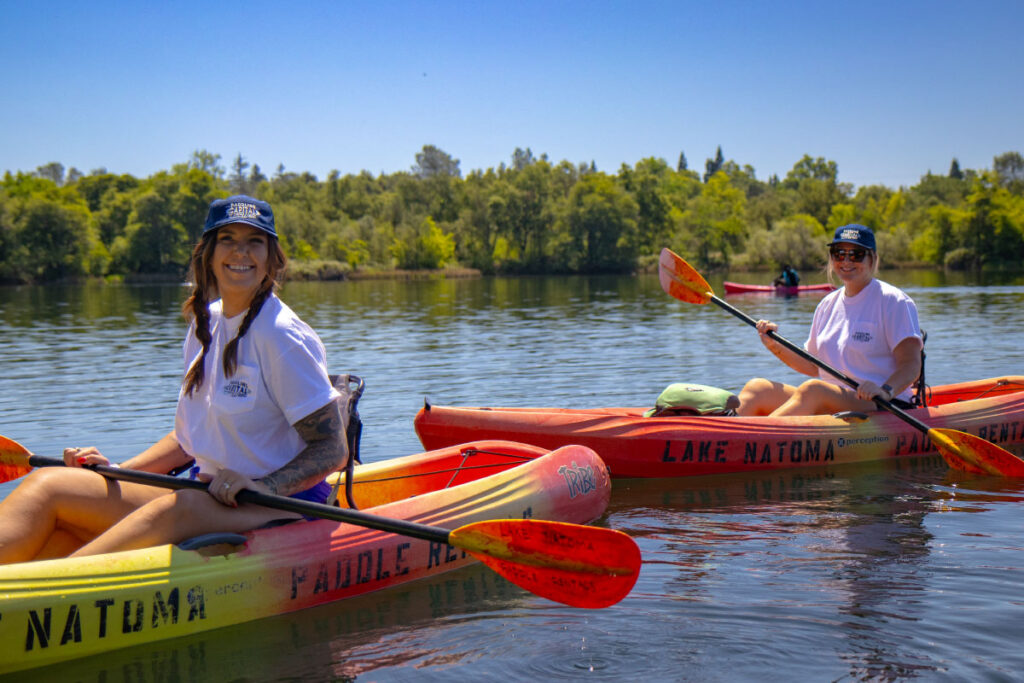
For kayakers, selecting a recreational kayak designed for calm water is often the best choice for beginners.
2. Holding the Paddle Incorrectly
It may sound simple, but many beginner paddlers hold the paddle backward without realizing it.
The paddle blade should angle away from you when paddling forward. This allows the blade to move more efficiently through the water, helping you paddle with less effort and greater control.
Using the correct paddle size is equally important. For stand-up paddleboarding, the handle should generally extend several inches above your head when standing on land. A properly sized paddle improves comfort, efficiency, and technique.
3. Standing in the Wrong Position
Balance begins with proper stance.
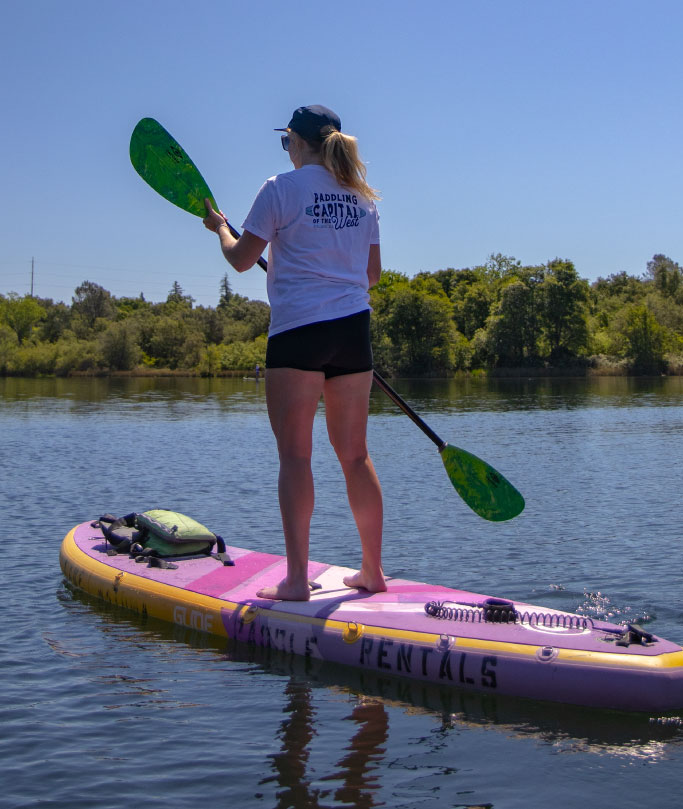
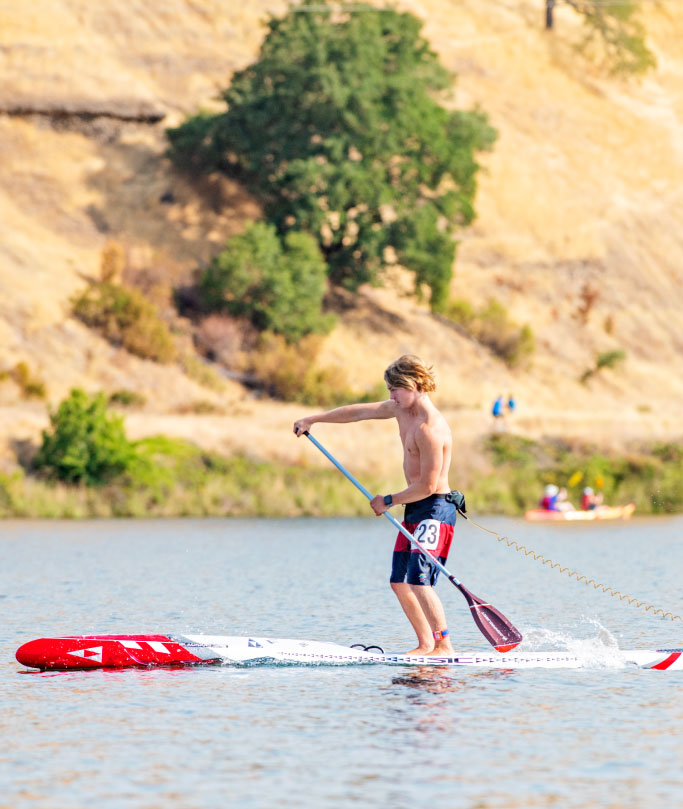
On a paddleboard, stand with your feet about shoulder-width apart and centered over the board’s carrying handle, which is typically the board’s balance point. Standing too far forward or too far back can make steering and stability more difficult.
Keep your knees slightly bent and relaxed. Think of your legs as shock absorbers that help you adjust to small movements in the water. A flexible stance will improve your balance and help prevent unnecessary falls.
4. Looking Down Instead of Ahead
Many first-time paddleboarders instinctively look down at their feet. While this feels natural, it can actually make balancing harder.
Instead, focus your eyes on the horizon or where you want to go. Looking ahead helps keep your body aligned and improves overall stability.
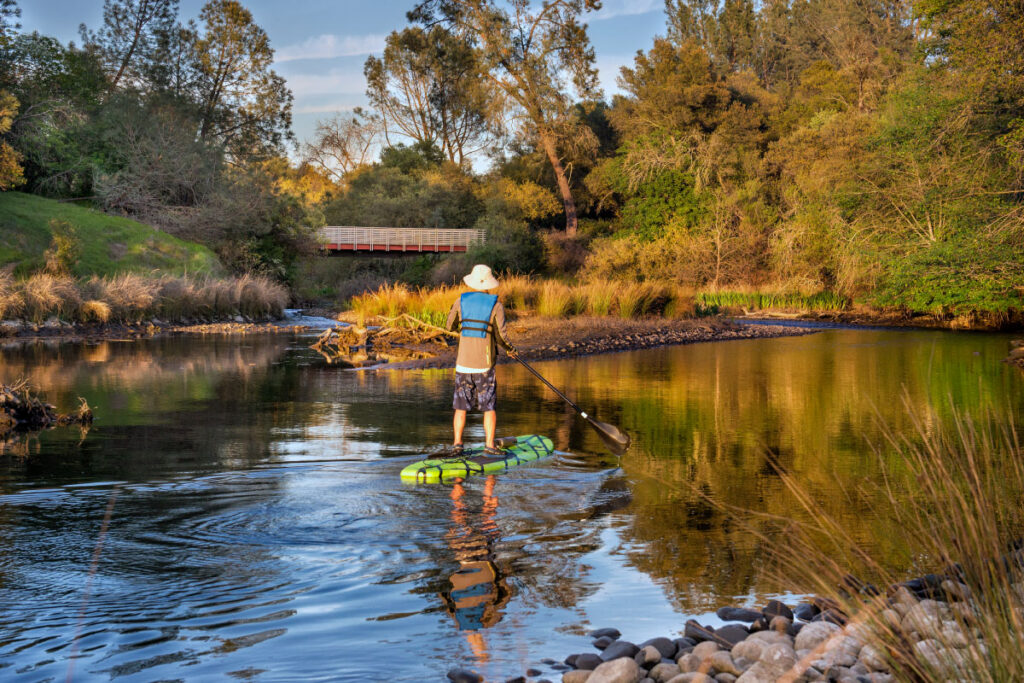
It’s also a great way to enjoy the scenery. As you paddle across Lake Natoma, you’ll find yourself surrounded by beautiful shoreline views, wildlife, and miles of scenic trails.
5. Using Only Your Arms
A common beginner paddling mistake is relying entirely on arm strength.
Efficient paddling comes from engaging your core muscles and rotating your torso with each stroke. This technique generates more power, reduces fatigue, and helps you paddle farther with less effort.
Learning proper paddling form early will make every future outing more enjoyable, whether you’re exploring Lake Natoma or venturing to other waterways.
6. Skipping Basic Safety Steps
Even on calm water, safety should always come first.
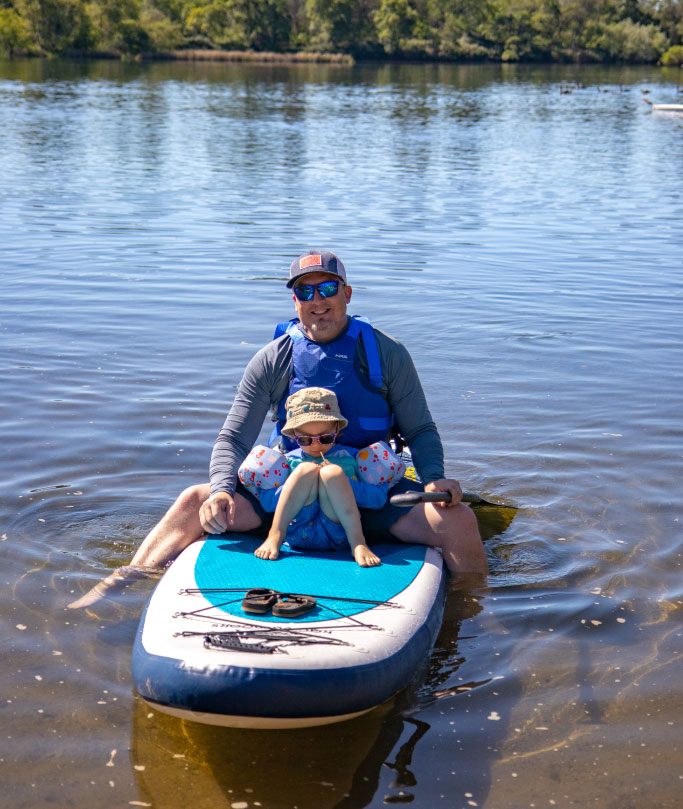
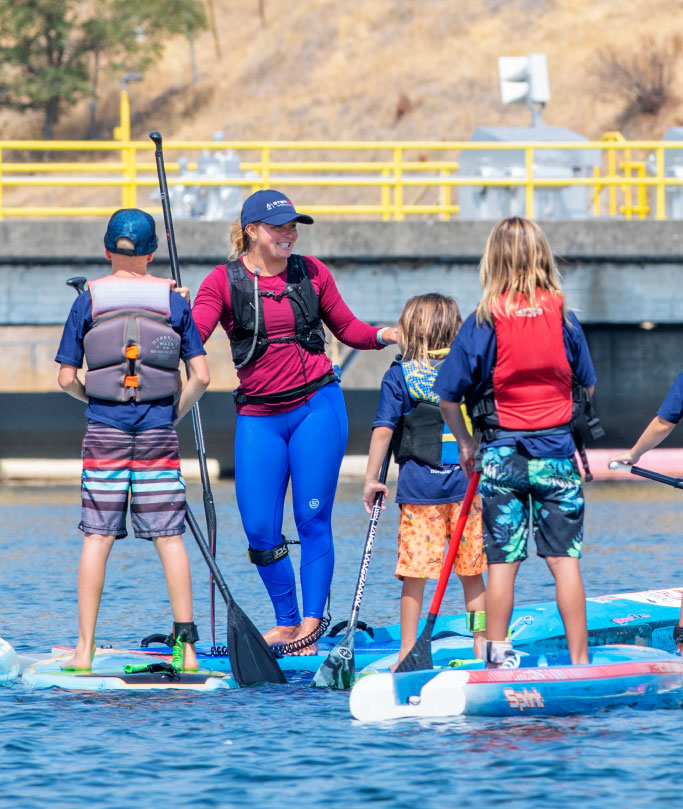
Before standing up on a paddleboard, make sure you’re in water deep enough to fall safely. Wear a properly fitted life jacket and use a leash when paddleboarding to keep your board nearby if you fall.
It’s also important to check weather conditions before heading out and let someone know your paddling plans.
Following these simple paddleboard safety tips can help ensure a safe and enjoyable day on the water.
7. Standing Up Too Soon
There’s no prize for being the first person standing on your board.
Take your time and start by kneeling. Get comfortable with the movement of the board and the feel of the water beneath you. Once you feel stable, slowly transition to standing.
Building confidence gradually is one of the best ways to learn how to paddleboard successfully.
If you’re kayaking, spend a few moments getting comfortable with your paddle strokes and steering before heading farther from shore.
8. Heading Out Without a Plan
One of the easiest mistakes to avoid is launching without knowing where you’re going.
Before heading out, familiarize yourself with launch locations, parking areas, and local conditions. Have a general idea of how far you want to paddle and where you’ll return to shore.
Lake Natoma offers several beginner-friendly launch points, making it easy to plan a route that matches your skill level and comfort zone.
Learn the Right Way
Wondering if beginners should take paddleboarding lessons?
While many people successfully learn on their own, a lesson from a qualified instructor can accelerate the learning process. Local outfitters and paddling programs on Lake Natoma offer opportunities to learn proper technique, build confidence, and develop safe habits from the start.
Even a short lesson can help you avoid common mistakes and make your time on the water more enjoyable.
Ready to Hit the Water?
With calm conditions, scenic shorelines, and beginner-friendly launch locations, Lake Natoma is one of the best places in California to learn paddleboarding and kayaking.
Avoid these common beginner paddling mistakes, take your time, and focus on building confidence with each outing. Before long, you’ll discover why so many paddlers are choosing Folsom as their destination and why it’s earning recognition as the Paddling Capital of the West.
Yes. Lake Natoma’s calm waters, scenic surroundings, and multiple launch locations make it one of the best places in California for beginner paddleboarding and kayaking.
Wear comfortable athletic clothing, a properly fitted life jacket, sunscreen, and water shoes if desired. Dress appropriately for the weather and water temperature.
Many beginners find kayaking easier because you’re seated and have a lower center of gravity. However, paddleboarding is easy to learn on calm water and offers a unique way to explore lakes and waterways.